Qu 32 User Manual: A Comprehensive Guide
This guide details the Qu-32 digital mixer’s setup and operation, offering eight free PDF manuals – including reference and user guides – for comprehensive support.
The Allen & Heath Qu-32 is a powerful digital mixer designed for both live sound and studio recording applications. This mixer boasts a flexible architecture, offering a high channel count and comprehensive features within a compact footprint.
It’s renowned for its intuitive user interface and robust build quality, making it suitable for professional audio engineers and musicians alike.
The Qu-32 provides a seamless workflow, integrating seamlessly with computers for multi-track recording via its built-in audio interface. Numerous resources, including free PDF manuals, are readily available to assist users in mastering its capabilities.
Understanding the Qu-32 Series
The Qu-32 belongs to Allen & Heath’s Qu Series of digital mixers, known for delivering professional-grade features in a user-friendly package. This series includes models like the Qu-24 and Qu-16, differing primarily in channel count and physical size.
All Qu-series mixers share a common core functionality, including the same intuitive control surface and powerful DSP engine.
The Qu-32 stands out with its expanded I/O and increased processing power, making it ideal for larger, more complex setups. Access to detailed documentation, like the Reference Manual, is crucial for understanding the nuances of the entire series.
Available Manuals and Resources
A wealth of resources supports the Qu-32 user, including nine freely downloadable PDF manuals from Allen & Heath. These encompass the Reference Manual, User Manual, Service Manual, and Getting Started guides, covering all aspects of operation and maintenance.
Users can view manuals online or download them for offline access, with a convenient scroll bar for easy navigation.
Beyond official documentation, vibrant online forums and communities offer peer-to-peer support and troubleshooting advice, alongside a comprehensive FAQ section on the Allen & Heath website.

Setting Up Your Qu-32
Initial setup involves unboxing, inspecting connections, and powering on the mixer, followed by basic configuration to prepare for audio input and output routing.
Unboxing and Initial Inspection
Carefully unpack your Qu-32 mixer, verifying all components are present. Check for any visible signs of shipping damage to the unit itself, the control surface, and included accessories.
Confirm the package contains the mixer, power cable, USB cable, and any documentation. Inspect all connectors – audio inputs/outputs, USB, and power – for damage or debris.
Retain the original packaging for potential future transport or warranty claims. A thorough initial inspection ensures you begin with a fully functional and undamaged device, maximizing your mixing experience and protecting your investment. Document any issues immediately and contact the retailer or Allen & Heath support.
Connecting Audio Inputs and Outputs
Establish connections using balanced XLRs or TRS cables for optimal audio quality. Route your microphones and instruments into the Qu-32’s input channels, ensuring correct gain staging for each source.
Utilize the outputs – XLR and TRS – to connect to your speakers, amplifiers, or recording devices. Remember to match impedance levels for clean signal transfer.
The Qu-32’s versatile connectivity supports various configurations, including front-of-house, monitor mixes, and recording setups. Carefully label all connections for easy identification and troubleshooting during live events or studio sessions. Proper cabling is crucial for a professional sound.
Powering On and Basic Configuration
Before powering on, verify the correct voltage setting on the Qu-32’s power supply to prevent damage. Connect the power cable securely and switch on the mixer.
The initial boot-up sequence will load the operating system. Allow this process to complete before attempting any operations.
Configure basic settings like clock source and USB audio interface mode via the menu system.
Perform a sound check with a single input channel to confirm proper signal flow and level adjustments. Ensure all connections are secure and functioning correctly before proceeding with a full setup.

Navigating the User Interface
The Qu-32 features an intuitive control surface, a clear display screen, and a menu system for efficient operation and channel strip understanding.
Overview of the Control Surface
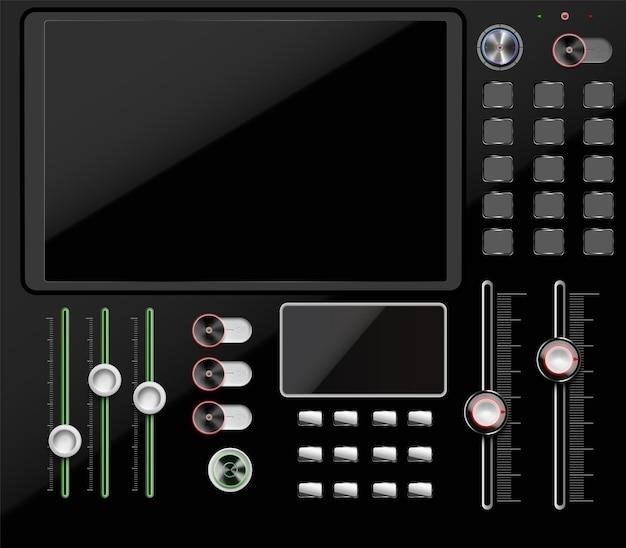
The Qu-32’s control surface is designed for tactile and responsive control over all mixing parameters. It features a central touchscreen for navigating menus and accessing deeper functions, complemented by dedicated encoders and buttons for frequently adjusted settings. These physical controls provide immediate access to channel levels, EQ, dynamics, and auxiliary sends.
The layout is logically organized, grouping related functions together for efficient workflow. Users can quickly adjust multiple parameters simultaneously, enhancing live mixing capabilities. Dedicated layer buttons allow swift switching between different control configurations, optimizing the surface for various tasks. This intuitive design minimizes menu diving and maximizes hands-on control.
Display Screen and Menu System
The Qu-32 boasts a high-resolution touchscreen that serves as the central hub for navigating its extensive menu system. This intuitive interface provides visual feedback and allows direct manipulation of parameters. The menu structure is logically organized, categorizing functions for easy access.
Users can quickly locate settings for routing, EQ, dynamics, effects, and scene management. Dedicated soft keys surrounding the screen provide shortcuts to commonly used functions, streamlining workflow. The display clearly presents channel information, metering, and signal flow, aiding in precise adjustments and monitoring.
Understanding the Channel Strips
Each channel strip on the Qu-32 offers comprehensive control over individual input signals. These strips feature motorized faders for precise level adjustments, alongside dedicated controls for gain, pan, and aux sends. Rotary encoders provide access to EQ, dynamics, and effects parameters.
A clear visual layout displays channel metering, phantom power status, and input source selection. Users can easily access channel settings via the touchscreen, mirroring the physical controls for intuitive operation. The channel strips are designed for efficient workflow, allowing quick and accurate adjustments during live performance or recording sessions.

Core Mixing Functions
The Qu-32 excels in essential mixing tasks, providing precise input channel control, flexible EQ and dynamics processing, and versatile auxiliary sends and returns.
Input Channel Control
Each input channel on the Qu-32 offers extensive control, allowing for detailed shaping of incoming audio signals. Users can adjust gain, polarity, high-pass filters, and phantom power directly from the control surface.
Furthermore, comprehensive metering provides visual feedback on signal levels, preventing clipping and ensuring optimal recording quality. The channel strips feature dedicated controls for accessing EQ, dynamics, and auxiliary sends.
Precise control over these parameters enables engineers to sculpt sounds with clarity and finesse, tailoring each input to fit seamlessly within the overall mix. The Qu-32’s intuitive layout streamlines workflow, making adjustments quick and efficient during live performances or studio sessions.
EQ and Dynamics Processing
The Qu-32 boasts powerful EQ and dynamics processing capabilities on each channel, offering precise tonal control and dynamic shaping. A four-band parametric EQ allows for detailed frequency adjustments, while selectable filters provide additional sculpting options.
Dynamics processing includes compression, limiting, and gating, enabling control over signal transients and overall loudness. These tools help to polish sounds, adding punch and clarity.
Users can save and recall EQ and dynamics settings as scenes, streamlining workflow and ensuring consistent sound across multiple performances or recordings. The intuitive interface makes complex processing accessible to both novice and experienced users.
Auxiliary Sends and Returns
The Qu-32 provides flexible auxiliary sends and returns for creating monitor mixes, effects loops, and other routing configurations. Multiple aux sends are available per channel, allowing signals to be routed to various destinations independently.
These sends can be pre- or post-fader, offering control over how signal levels affect monitor mixes or external effects. Dedicated stereo returns allow for easy integration of external processors or recorded material.
The Qu-32’s aux routing matrix provides a clear overview of signal flow, simplifying complex setups and ensuring optimal signal distribution for diverse applications.

Advanced Features
The Qu-32 boasts DSP, scene management, and a built-in audio interface, enabling multi-track recording to a Mac or PC for enhanced workflow.
Digital Signal Processing (DSP)
The Qu-32’s powerful DSP engine provides a versatile toolkit for shaping your sound. It offers comprehensive EQ and dynamics processing on each channel, allowing precise control over tonal characteristics and dynamic range. Users benefit from high-quality effects, including reverbs, delays, and compressors, enhancing the sonic palette.
This robust DSP capability ensures professional-grade audio processing, enabling engineers to achieve polished and refined mixes. The mixer’s architecture efficiently manages these processes, minimizing latency and maximizing performance. Explore the extensive DSP options to unlock the full potential of your audio productions and live sound reinforcement.
Scene Management and Recall
The Qu-32 excels in live performance and complex setups with its robust scene management features. Users can save and recall complete mixer configurations – including EQ, dynamics, aux sends, and more – instantly. This allows for seamless transitions between songs or different acts, streamlining workflow and minimizing setup time.
Storing multiple scenes provides flexibility and ensures consistent sound quality across an entire event. The intuitive interface simplifies scene creation, editing, and recall, making it accessible for both novice and experienced users. Efficient scene management is crucial for professional audio applications.
Built-in Audio Interface Functionality
The Qu-32 boasts a powerful integrated audio interface, enabling direct multi-track recording to Mac or PC computers. This eliminates the need for external sound cards or interfaces, simplifying the recording process and reducing setup complexity. With the ability to record up to 32 tracks simultaneously, it’s ideal for professional studio and live recording applications.
Furthermore, computer returns can be easily routed to the mixer’s input channels, facilitating virtual soundcheck and playback integration. This feature enhances workflow and provides greater control over the audio signal path.

Recording and Playback
The Qu-32 facilitates seamless recording to computers, supporting multi-track capabilities and offering flexible playback and monitoring options for efficient workflow.
Connecting to a Computer
The Allen & Heath Qu-32 boasts a built-in audio interface, simplifying connection to both Mac and PC computers. This allows for direct multi-track recording of up to 32 tracks simultaneously, streamlining your production process. Computer returns can then be easily routed and assigned to the mixer’s input channels, creating a flexible and integrated workflow.
Establishing this connection unlocks powerful recording and playback capabilities, turning the Qu-32 into a central hub for your audio projects. The interface ensures high-quality audio transfer, maintaining the integrity of your sound throughout the recording and mixing stages.
Multi-Track Recording Capabilities
The Qu-32’s integrated audio interface excels in multi-track recording, capable of capturing up to 32 individual tracks directly to your computer. This feature eliminates the need for external audio interfaces, simplifying your setup and reducing potential latency issues. Recording is supported on both Mac and PC platforms, offering broad compatibility.
This capability is ideal for live recordings, rehearsals, or studio sessions where isolating individual instrument and vocal tracks is crucial. The Qu-32 provides a robust and reliable solution for capturing high-quality multi-track audio, empowering you with maximum flexibility in post-production.
Playback and Monitoring Options
The Qu-32 offers versatile playback and monitoring features, allowing seamless integration with your computer-based audio workstation. Returns from the computer can be easily routed to the mixer’s input channels, enabling you to incorporate virtual instruments, backing tracks, or pre-recorded audio into your live mix.
Dedicated monitoring options provide flexibility for performers and engineers. You can create custom monitor mixes for individual musicians, ensuring everyone hears exactly what they need. Comprehensive monitoring controls allow precise adjustments to levels and equalization, optimizing the listening experience.

Troubleshooting Common Issues
Addressing audio dropouts, noise, and connectivity problems, this section guides users through solutions and maintenance, including vital firmware updates for optimal performance.
Audio Dropouts and Noise
Experiencing audio dropouts or unwanted noise with your Qu-32? Several factors could contribute to these issues. First, meticulously check all cable connections – ensure they are secure and undamaged. Inspect for ground loops, which often manifest as hum or buzz; try different power outlets or a ground lift adapter cautiously.
Verify that your computer’s USB connection is stable and meets the mixer’s requirements, especially during multi-track recording. Confirm proper gain staging throughout the signal chain, avoiding clipping at any stage. Finally, outdated firmware can sometimes cause instability; regularly check the Allen & Heath website for updates and follow the provided instructions carefully to resolve these common problems.
Connectivity Problems
Encountering difficulties connecting your Qu-32 to a computer or other devices? Begin by verifying the USB cable and port functionality with another device. Ensure you’ve installed the correct Allen & Heath drivers for your operating system, downloading the latest version from their website.
Check the audio interface settings within your computer’s operating system and DAW software, confirming the Qu-32 is selected as the input and output device. For network connectivity, verify the IP address settings and network cable. If issues persist, consult the Allen & Heath support resources or online forums for specific troubleshooting steps.
Firmware Updates and Maintenance
Maintaining your Qu-32 with the latest firmware is crucial for optimal performance and stability. Regularly check the Allen & Heath website for available updates and follow their detailed instructions for installation. Back up your scenes and settings before updating to prevent data loss.
Routine maintenance includes keeping the control surface clean with a soft, dry cloth. Avoid using harsh chemicals or liquids. Periodically inspect cables and connectors for damage. Proper care ensures the longevity and reliable operation of your Qu-32 mixer.

Safety and Maintenance
Prioritize safety by reading the user guide before operation. Clean the Qu-32 with a soft, dry cloth and store it carefully to ensure longevity.
Important Safety Instructions
To guarantee safe operation and prevent potential hazards, carefully review these crucial safety instructions before using your Allen & Heath Qu-32. Always ensure proper grounding to avoid electrical shock. Avoid operating the mixer in damp or wet conditions, and never expose it to extreme temperatures.
Do not attempt to disassemble or modify the Qu-32, as this could result in damage or injury. If a malfunction occurs, immediately disconnect the power and contact qualified service personnel. Regularly inspect the power cord for damage and replace it if necessary.
Keep the ventilation openings clear to prevent overheating. Use only the specified power supply and voltage. Following these guidelines will ensure a safe and reliable experience with your Qu-32 mixer.
Cleaning and Storage
Maintaining your Allen & Heath Qu-32 ensures longevity and optimal performance. Regularly clean the exterior surfaces with a soft, dry cloth. Avoid using abrasive cleaners or solvents, as these can damage the finish. For stubborn dirt, lightly dampen the cloth with a mild detergent solution, then wipe dry.
When storing the Qu-32, disconnect all cables and power. Protect it from dust, moisture, and extreme temperatures. Consider using a protective cover to prevent scratches and damage during storage or transport. Store in a secure location, away from direct sunlight and potential impact.
Warranty Information
The Allen & Heath Qu-32 is covered by a limited warranty, protecting against defects in materials and workmanship. The warranty period typically begins from the original date of purchase. To be eligible, retain your proof of purchase – this is crucial for any warranty claim.
The warranty doesn’t cover damage caused by misuse, accidents, unauthorized modifications, or normal wear and tear. For specific warranty terms, duration, and claim procedures, refer to the official Allen & Heath documentation included with your Qu-32 or visit their website.

Specifications and Technical Details
The Qu-32 boasts detailed physical and audio specifications, alongside power requirements, offering a comprehensive overview of its technical capabilities for informed usage.
Physical Specifications
The Allen & Heath Qu-32 is a robust digital mixer designed for professional audio applications. Its dimensions are carefully considered for both stage and studio use, balancing portability with a comprehensive control surface. While precise measurements require consulting the official documentation, the Qu-32 is notably larger than its Qu-16 counterpart, accommodating a greater number of physical faders and controls.
The unit’s construction prioritizes durability, utilizing a sturdy chassis and high-quality components. Weight is a factor, reflecting the internal power supplies and processing capabilities. Detailed specifications regarding rack mounting options, depth, height, and width are available within the official Allen & Heath documentation for precise integration into existing setups.
Audio Specifications
The Allen & Heath Qu-32 boasts impressive audio specifications, delivering high-fidelity sound reproduction. It features a maximum input level designed to handle diverse signal sources without clipping, and a wide frequency response ensuring accurate audio across the spectrum. The mixer supports a high sample rate, crucial for multi-track recording via its built-in audio interface.
Dynamic range is a key strength, providing clarity and detail in both quiet and loud passages. Total Harmonic Distortion (THD) is kept exceptionally low, minimizing unwanted artifacts. Detailed specifications regarding input impedance, output levels, and noise floor are available in the official documentation, ensuring optimal performance and integration with professional audio systems.
Power Requirements
The Allen & Heath Qu-32 is designed for reliable operation within specific power parameters. It typically operates on a standard AC power supply, with voltage requirements varying by region – commonly 100-240V, 50/60Hz. Always verify compatibility with your local power infrastructure before connecting the mixer.
Power consumption is a consideration for venue electrical capacity. The Qu-32’s power draw is moderate, but it’s essential to avoid overloading circuits. The user manual details precise wattage figures. Using the correct power cable and ensuring proper grounding are crucial for safety and preventing damage to the unit.

Resources and Support
Access Allen & Heath’s website for support, online forums, and FAQs; Numerous manuals are available for free PDF download, aiding Qu-32 operation and troubleshooting.
Allen & Heath Website and Support
The Allen & Heath website serves as a central hub for Qu-32 users seeking assistance and resources. Here, you’ll find a dedicated support section offering downloadable manuals – including the comprehensive Reference Manual and User Manual – in PDF format. These resources cover everything from initial setup to advanced features and troubleshooting.
Beyond downloadable materials, the website provides access to software updates, firmware revisions, and helpful knowledge base articles addressing common issues. Direct contact options, such as email support and a contact form, are also available for personalized assistance. The official website ensures users have the tools needed for optimal Qu-32 performance and a seamless mixing experience.
Online Forums and Communities
Numerous online forums and communities are dedicated to Allen & Heath products, including the Qu-32 mixer. These platforms provide a valuable space for users to connect, share knowledge, and troubleshoot issues collaboratively. Experienced Qu-32 operators often contribute helpful tips, workflow suggestions, and solutions to common problems encountered by fellow users.
These communities offer a dynamic learning environment where you can ask questions, participate in discussions, and benefit from the collective expertise of a passionate user base. Searching these forums can quickly reveal answers to specific questions or provide insights into maximizing the Qu-32’s capabilities.
Frequently Asked Questions (FAQ)
A comprehensive collection of Frequently Asked Questions (FAQs) addresses common inquiries regarding the Qu-32 digital mixer. These FAQs cover a wide range of topics, from initial setup and basic operation to advanced features and troubleshooting. Users can quickly find answers to frequently encountered problems, saving time and effort.
The FAQs often include step-by-step instructions, clear explanations, and helpful diagrams to guide users through various processes. Consulting the FAQ section is a great first step when encountering an issue, potentially resolving it without needing further assistance.