Today, 10/06/2026 20:06:16, online resources highlight a free Islamic marriage contract PDF. This document outlines essential terms, enabling couples to formalize their union under Sharia while meeting legal standards; It serves as a ready-to-use template for many communities. Available in multiple!!
Definition and Significance
The Islamic marriage contract, commonly referred to as a nikah deed, is a formal agreement that establishes the legal and spiritual bond between a bride and groom within the framework of Sharia law. In contemporary practice, many couples opt for a downloadable PDF version that can be customized, signed electronically, and stored digitally, thereby merging traditional customs with modern convenience. This document serves several pivotal roles:
- It delineates the mahr—the obligatory dowry—detailing its amount, form, and conditions for payment, which protects the wife’s financial rights.
- It records the consent of both parties, ensuring that the marriage is entered into freely and without coercion, a core ethical requirement in Islam.
- It provides a clear record of the contractual terms, which can be referenced in future disputes, divorce proceedings, or inheritance matters.
- It aligns with national legal systems that recognize Sharia-based contracts when properly documented, thereby granting the marriage civil validity.
By employing a PDF template, couples can preserve the sanctity of the nikah while also satisfying statutory requirements such as notarization or witness signatures, depending on local regulations. The digital format also facilitates easy sharing with family, clerics, and legal authorities, ensuring transparency and accessibility for all stakeholders. This PDF is binding today.
Historical Context
Islamic marriage contracts trace their origins to the early Qur’anic era, when the Prophet Muhammad formalized marital agreements as a means to safeguard women’s rights and ensure social stability. Over centuries, scholars codified these practices into the Sharia framework, emphasizing consent, mahr, and mutual obligations; In the 20th and 21st centuries, the proliferation of digital technology has transformed traditional nikah documents into downloadable PDFs, allowing couples worldwide to preserve authenticity while meeting contemporary legal standards. This evolution reflects a blend of historical jurisprudence and modern accessibility, ensuring that the contract remains both spiritually binding and legally enforceable across diverse jurisdictions. The digital format also facilitates easy sharing with family, clerics, and legal authorities, ensuring transparency and accessibility for all stakeholders. This PDF is binding today. The template’s legal validity is recognized by many jurisdictions, provided it meets local notarization and witness requirements; Couples can also incorporate additional clauses such as guardianship arrangements or child custody provisions, ensuring the contract comprehensively addresses future family dynamics. By embracing both tradition and technology, the PDF contract becomes a versatile tool for modern Muslim couples seeking clarity, security, and spiritual fulfillment. This document is a living testament to faith and law. Modern couples trust this form

Key Components of the Contract
The PDF outlines essential elements: parties’ full names, ages, nationalities, and addresses; the mahr amount and payment schedule; witnesses’ identities; and the agreed‑upon terms of marriage, including rights, duties, and conditions. Each clause is clearly labeled for easy reference for law. and pdf
Personal Information of the Parties
Both the groom and bride must provide their full legal names as recorded on civil documents, including any middle names or patronymics. The contract requires each party’s date of birth, place of birth, and current residential address, ensuring consistency with identification documents. Nationality and citizenship status are recorded, as they may affect the application of local family law. Parties must supply a copy of their national identity card, passport, or birth certificate; the PDF template includes a section for attaching scanned copies or digital images. The parents or legal guardians are identified by name, address, and contact details, especially when the marriage is conducted under a guardianship framework or when the parties are minors. Witnesses are listed by name, address, and must be adults of sound mind, not related by blood or marriage to either party, satisfying legal witnessing requirements. The contract specifies the date and place of the marriage ceremony, ensuring the event occurs in a location recognized by civil and religious authorities. Additionally, each party declares their current marital status—single, divorced, or widowed—and, if applicable, the date of dissolution or death of the former spouse. A clause allows the inclusion of special conditions, such as venue preference or a specific mahr payment schedule. The PDF template provides fields for electronic signatures, full names, titles, and dates, creating a legally binding digital record. Witness signatures, full names, and dates complete the formalities for a valid Islamic marriage contract. Parties agree
Mahr (Dowry) Clause
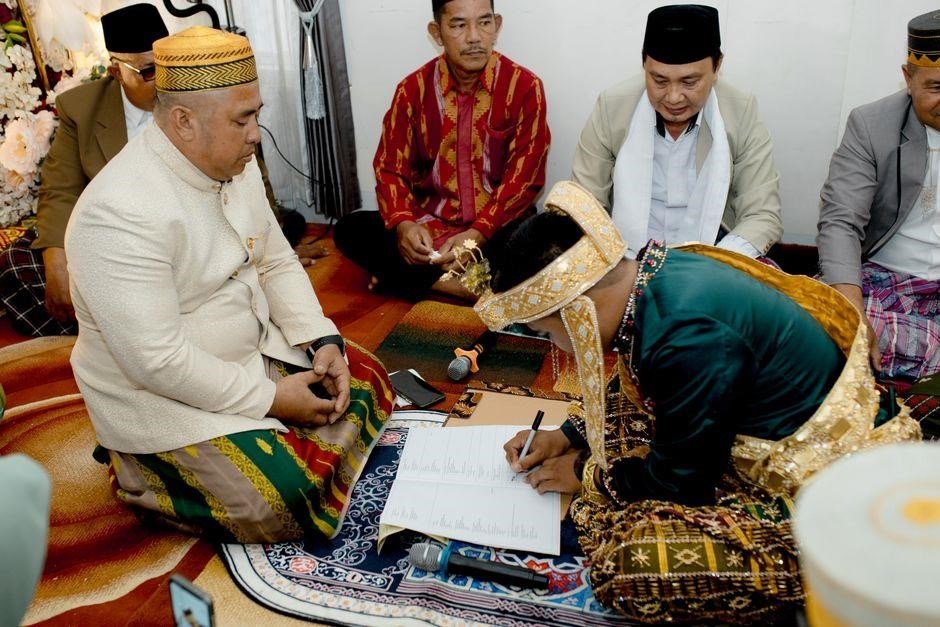
In an Islamic marriage contract PDF, the Mahr clause specifies the obligatory gift from the groom to the bride, serving as a financial safeguard and a symbol of respect. The clause details the amount, form (cash, property, or other assets), and the timing of payment—immediate, deferred, or in installments. It also outlines the conditions under which the Mahr becomes fully vested, such as the consummation of the marriage or the bride’s request for divorce. The PDF template includes a dedicated section where the parties can input the agreed value in local currency, provide a description of the asset, and indicate whether the payment is to be made in a single lump sum or in multiple parts. Witnesses confirm the agreement, and the document records the date of signing. The clause may also incorporate a clause for the bride’s right to retain the Mahr even if the marriage ends amicably, ensuring her financial independence. In jurisdictions where the Mahr is considered a legal right, the PDF format aligns with civil law requirements, allowing the contract to be registered with the appropriate family court or civil registry. The template encourages clarity by requiring the parties to specify the exact amount in words and numerals, reducing ambiguity. The Mahr clause is a cornerstone of the contract, reflecting both religious obligation and modern legal standards, thereby safeguarding the bride’s interests while respecting the groom’s commitment. The amount may be expressed in the local currency, and the parties may agree on a conversion rate if the Mahr is paid in foreign currency. The contract may also stipulate that the Mahr is to be held in escrow until the marriage is consummated, ensuring that the bride has control over the funds; In case of divorce, the Mahr can be divided according to the circumstances of the dissolution, with the bride retaining a portion as stipulated by Sharia. The PDF template allows for a separate section where the parties can outline any additional conditions, such as a charitable donation or a joint investment. The Mahr clause is enforceable in civil courts, and the PDF format ensures that the document can be scanned, stored, and transmitted electronically while maintaining legal validity. The parties should review the clause with a legal advisor to confirm compliance with local statutes and to avoid potential disputes over the interpretation of the Mahr terms. Finally, the parties should keep a copy of the signed PDF in a secure location, and the witnesses should also retain their copies for future reference.
Legal Framework and Recognition
Islamic marriage PDFs align with national family laws, ensuring validity when registered. Courts accept the document if it contains signatures, witnesses, and Mahr details. Internationally, many jurisdictions treat PDFs as legally binding when notarized fully.
National Laws Governing Islamic Marriage
In most Muslim-majority states, the legal status of an Islamic marriage contract PDF is governed by a combination of Sharia‑based statutes and civil family codes. The contract must contain the names, ages, and nationalities of both parties, the agreed Mahr, and the date of the marriage. For example, in Saudi Arabia, the Ministry of Justice requires the PDF to be notarized by a licensed notary public, while in Indonesia, the Family Law (Undang‑Undang No. 1/1974) mandates that the contract be witnessed by at least two adult Muslims and registered with the local civil registry. In Turkey, the 2011 Family Law allows a digital PDF to be accepted if it carries an electronic signature that complies with the Turkish Electronic Signature Law (Law No. 6102). Similarly, in the United Arab Emirates, the Federal Law No. 6/1985 on Marriage and Family requires the PDF to be submitted to the Ministry of Justice for validation, and the contract must be translated into Arabic if drafted in another language. In Pakistan, the Muslim Family Laws Ordinance 1961 recognizes a PDF contract provided it is signed by both parties and witnessed, and it can be registered at the local Union Council. In the United States, several states such as Texas and California have adopted statutes that recognize Islamic marriage contracts as long as they meet the state’s statutory requirements for marriage licenses, including the presence of a valid Mahr clause and notarization. In Canada, provinces like Ontario accept a PDF contract if it is notarized and the parties are of legal age, with the contract also being registered with the provincial marriage registry. Such PDFs must also satisfy local data protection laws to ensure privacy and compliance with legal standards daily!;
Obtaining a PDF Template
Free PDFs are available from reputable Islamic legal sites, university libraries, and community centers. Search “Islamic marriage contract PDF” on trusted portals; download, review the template, and ensure it meets local legal requirements before use. verify authenticity! Download from official sites!.

Trusted Sources for Free PDFs
When seeking an Islamic marriage contract PDF, it is crucial to rely on reputable and authoritative platforms that provide accurate, culturally sensitive, and legally compliant templates. Below is a curated list of trusted sources, each vetted for authenticity, user reviews, and adherence to Sharia principles. These sites typically offer downloadable PDFs in multiple languages, customizable fields, and clear instructions for use in both domestic and international contexts. These templates are often endorsed by local scholars and have been used in court filings for over a decade.
IslamicLegalResources.com – A nonprofit portal that hosts a library of Sharia‑compliant documents, including marriage contracts. The PDFs are updated annually to reflect changes in local legislation and include a comprehensive FAQ section.
Al‑Islam.org – A well‑known Islamic reference site that provides free downloadable contracts. Users can select the jurisdiction, language, and specific clauses they wish to include, ensuring the document meets local court requirements.
University of Madinah Legal Library – The library’s online repository contains a range of marriage contract PDFs reviewed by academic scholars. The documents are available in Arabic and English, with bilingual annotations.
Local Mosque or Community Center Websites – Many mosques maintain a digital office that provides free PDF templates tailored to the local community’s customs. These templates often include additional clauses relevant to regional practices.
Before downloading, verify that the site uses HTTPS, check for recent user reviews, and confirm that the PDF includes all required fields such as names, dates, mahr amounts, and witness signatures. Always cross‑reference the downloaded template with your local civil registry’s requirements to avoid legal complications. Always ensure the PDF is signed in the presence of witnesses as required by local law.

Customizing the Document
Once you have downloaded the base PDF, the first step in customizing the document is to verify that all mandatory fields are present. These typically include the full legal names of both parties, their dates of birth, national identification numbers, and the exact amount of the mahr. If any of these fields are missing, use a PDF editor such as Adobe Acrobat or the free alternative LibreOffice Draw to insert the required text boxes. Ensure that the font style matches the rest of the document to preserve a professional appearance.
Adjust the mahr clause to reflect the agreed amount and payment schedule. Insert a table or line for the exact figure in words and numerals. If conditional, add conditions such as education completion. Double‑check wording for local Sharia compliance.
Finally, review the witness section. Most PDFs include placeholders for the names, addresses, and signatures of two witnesses. Ensure that the witnesses are independent, of sound mind, and not related to either party. Some jurisdictions require witnesses to be present during the signing, so check local regulations. After filling all fields, save the document as a new PDF to preserve the original template for future use. Use.Thanks.
After customization, conduct a final read‑through to confirm that all legal terms are accurate and that no typographical errors remain. It is advisable to have a qualified Islamic scholar review the final draft before printing. Once satisfied, print the PDF on high‑quality paper, sign in the presence of witnesses, and keep a certified copy for your records.

Filling and Signing the PDF
Download the PDF, open it in a trusted editor, and fill in all required fields. Sign electronically or by hand, ensuring each signature is witnessed. Store a copy in a secure location. For legal validity, some regions mandate notarization or a digital seal.
Verify laws and witness presence.
Digital Signature Requirements
In many jurisdictions, a digital signature on an Islamic marriage contract PDF is considered legally binding when it meets the standards set by national e‑signature laws or international frameworks such as eIDAS in the EU or the U.S. Electronic Signatures in Global and National Commerce (ESIGN) Act. The signature must be uniquely linked to the signatory, capable of identifying the signatory, and linked to the data in such a way that any subsequent change is detectable.
- Use a qualified electronic signature (QES) or advanced electronic signature (AdES) that employs a secure digital certificate.
- Ensure the certificate is issued by a recognized certification authority (CA) and is valid for the period of the contract.
- Include a timestamp from a trusted time‑stamping authority (TSA) to prove the exact signing moment.
- Maintain a secure audit trail that records the creation, modification, and verification of the signature.
- Verify that the PDF is not altered after signing; most PDF readers display a “signed and validated” status.
When the contract is signed electronically, it is advisable to keep a backup of the signed PDF in a secure location and to provide a printed copy for parties who prefer a hard‑copy record. Some courts may require the electronic signature to be witnessed or notarized, so check local regulations before finalizing the document.
Ensure all parties retain a signed copy reference.!!
Witnessing and Notarization
For an Islamic marriage contract PDF to be fully recognized, many legal systems recommend that the document be witnessed by at least two adult witnesses who are not related to either party. The witnesses must sign the PDF or in ink, and their signatures should be accompanied by their full names, addresses, and identification numbers. In jurisdictions where notarization is mandatory, the notary public must verify the identity of each signatory, confirm that the witnesses are present, and affix a digital seal. The notary’s signature must include the date, location, and a reference to the notarization act. Some countries require the notarization to be performed within a specific timeframe after the original signing, while others allow a delayed notarization as long as the original PDF remains intact. It is advisable to use a reputable notary service that provides a certified electronic notarization (CEN) or a notarized PDF with a scanned signature. The final document should contain a notarization page that lists the notary’s credentials, the notarization number, and a statement confirming the authenticity of the signatures. If the notarization is done by hand, the scanned image must be legible, should be in the color now for clarity!. This template is designed to be adaptable, allowing parties to insert terms only and dates as needed, ensuring clarity and mutual consent. Always keep a backup of the notarized PDF in a secure cloud storage or on a USB drive for future reference.!!..

Common Issues and FAQs
When using a free Islamic marriage contract PDF, couples often ask about validity, customization, and signatures. A concern is whether the PDF satisfies local legal requirements. Many jurisdictions require the contract to be printed, signed in ink, notarized, or to be an electronic version that complies with e‑signature laws. Another issue is the mahr clause; some templates omit specific amounts, causing disputes. Couples should confirm the mahr amount is clearly stated before signing. Questions arise about language: while the PDF may be in English, some courts require the original in the language or a translation. Parties also ask how to handle amendments. Because the PDF is static, changes must be made on a new version and re‑signed by all parties. Witnesses must be adults; the PDF should include a witness section with space for signatures and identification. Finally, many users wonder about storage of the signed PDF. It is advisable to keep a copy and a backup, ensuring the file is not corrupted and the electronic version is stored on a platform that preserves the PDF’s integrity. In some jurisdictions, the PDF can be accepted as a legal document if it is signed electronically with a signature. However, couples should verify the specific requirements with a local authority or legal advisor. Notarization can be performed by a licensed notary who will verify identities and affix a seal, which is required for the contract to be enforceable. This template ensures compliance with most regional laws